
Before the Next Disaster Strikes: Good Neighbors Philippines Pushes for Safer, More Inclusive Schools
Ensuring that every child learns in a safe and nurturing environment is not just an education goal—it’s a humanitarian priority.
According to the 2024 World Risk Index, the Philippines remains the most at-risk country in the world for the third consecutive year in terms of exposure to natural disasters. As climate change continues to intensify the frequency and magnitude of both natural and human-induced hazards, the impacts on economies, education systems, and vulnerable populations grow more severe.
Children, who make up 50 to 60 percent of affected populations during disasters, bear the brunt of these crises. Indigenous children and children with disabilities are especially at risk, often excluded from disaster risk reduction (DRR) planning and decision-making processes. Despite numerous preparedness efforts, many DRR programs still fail to fully account for the specific needs of disadvantaged children.
Building Inclusive and Resilient School
In response, Good Neighbors Philippines, in partnership with UNICEF, SM Prime Holdings, the Local Government of Angeles City, and the Department of Education (DepEd) – Angeles Schools Division, commenced the Inclusive Child-Centered Disaster Risk Reduction and Management (ICDRRM) Programme in Angeles City, Pampanga. The project was implemented in collaboration with selected schools and barangays, where Information, Education, and Communication (IEC) materials were developed, and school personnel, learners, youth leaders, and barangay officials were capacitated on child-centered disaster preparedness. The initiative also established ICDRRM-friendly spaces in schools to promote safety and inclusivity
Strengthening National Policy for Safer Learning Spaces
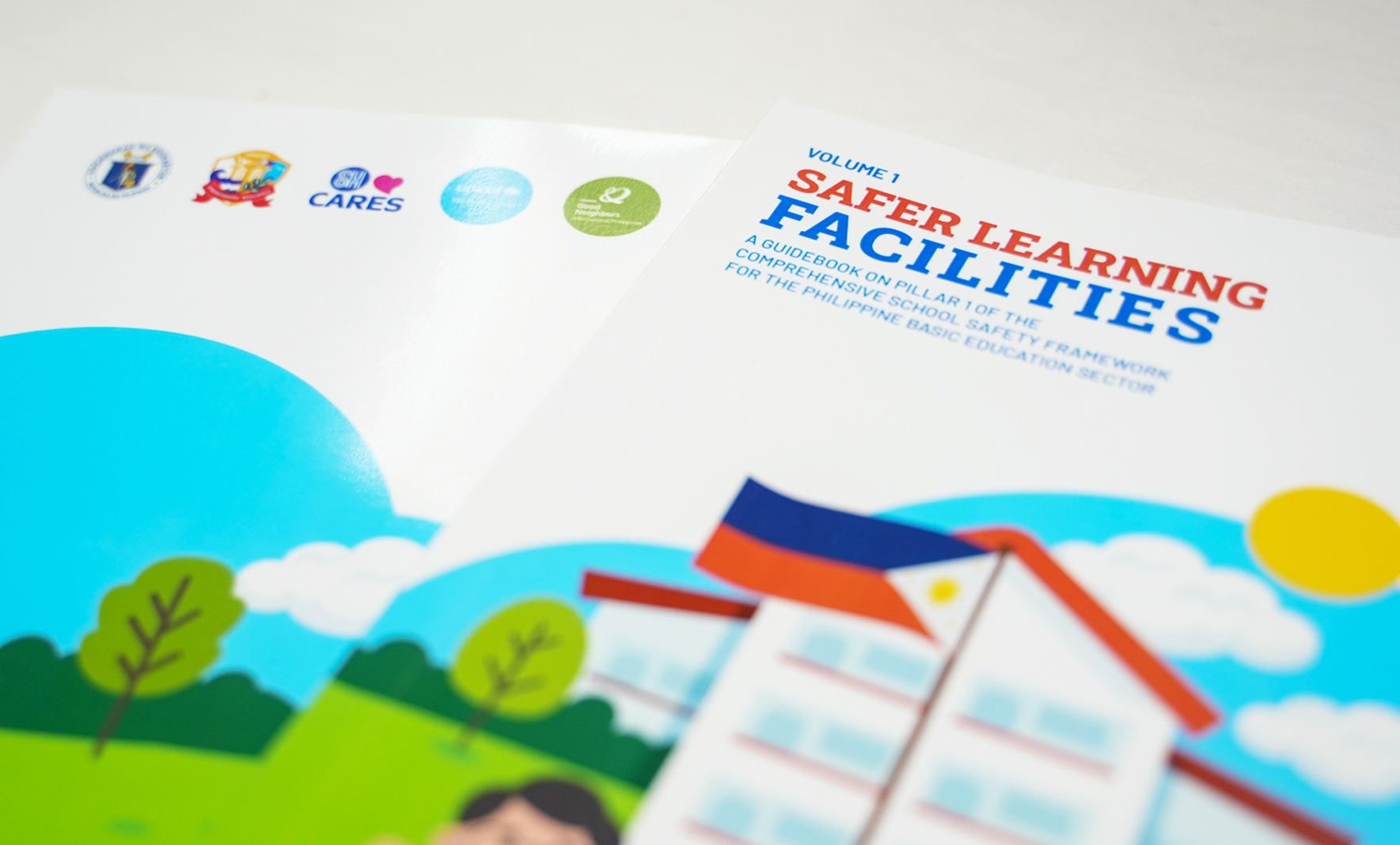
In Phase III of the ICDRRM project, UNICEF Philippines and Good Neighbors Philippines worked with DepEd to integrate ICDRRM principles into the revised Pillar 1: Safer Learning Facilities Guidebook. The reference manual promotes resilient design, safe site selection, and proper maintenance practices aligned with the Comprehensive School Safety (CSS) Framework and the Sendai Framework for Disaster Risk Reduction.
Pillar 1, which emphasizes Safe Learning Facilities, aims to safeguard students and school communities from deaths and injuries caused by structural collapse, damage, or malfunction. It also minimizes infrastructure losses through stronger standards and better-informed decision-making.
The active contribution of DepEd, UNICEF Philippines, and Good Neighbors Philippines help ensure that new and existing schools across the country are safer, greener, and more inclusive.
The guidebook highlights what to watch out for, what to prioritize, and how to take action even when resources are limited.
A Shared Vision for Child Safety
This transformative partnership with DepEd and UNICEF reaffirms Good Neighbors Philippines’ commitment to building capacities for Filipino children and learners; promoting safe, inclusive, and resilient school facilities where they can grow to become good neighbors.
Because when schools are safe, children’s futures are protected.
For Donations and Partnerships, please contact:
Good Neighbors Philippines Fundraising Team
📍 Main Office:
4th Floor AIA Building
Aurora Blvd. Cubao, Quezon City
1109, Metro Manila, Philippines
📞 Tel: (02) 8711-4337
✉️ Email: giving@goodneighbor.ph
🌐 Website: www.goodneighbors.ph
🔗 Facebook: fb.com/GoodNeighborsPH